![[Schizoid Man Eyes]](../images/crimeyes.gif) Back to Elephant Talk -- Reviews page
Back to Elephant Talk -- Reviews page
Date Submitted: 20-Sep-97
Submitted By: Robert Cervero (robertc at uclink4 dot berkeley dot edu)
THE NIGHT WATCH PLAYBACK (September 13, 1997, Intercontinental Hotel, Hyde Park Corner, London):

The Concertgebouw show has to be the most bootlegged concert of King Crimson, bar none. My own collection counts eight different CDs of this one show. This is no coincidence. Concertgebouw was one of Crimson's strongest performances ever. It was with absolute amazement that we find out from the liner notes of DGM's just-released The Night Watch CD that, in the words of David Cross, the band took to the Concertgebouw stage "deep down tired", "low in morale", and as "four tired and separate individuals". We can only wonder what that November evening in Amsterdam, and the SaBB album that followed, might have been had Fripp, Cross, Wetton, and Bruford been rested, upbeat, and connected souls.
My brief visits to London twice in one year to attend the Playbacks of my
two favorite bands of all time -- 1969 and 1973-74 Crimsons -- was only
possible courtesy of having chalked up more frequent flier miles than I
could ever use (plus having a very understanding wife and kids). 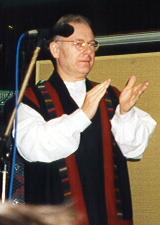
 The
September 13th playback in London was billed by DGM as a "listening of our
new releases, not a live King Crimson concert". Perhaps so, however as far
as I could tell, nearly all the 1000-plus folks who attended the playback
were there for the Crimson experience, to pay tribute to one of the most
potent four-man rock lineups ever. Tony Geballe, the only non-Crimsoner
featured at the playback, kicked things off with a 12-string acoustical
soundscape. Tony belongs to Fripp's inner circle of Crafty Guitarists and,
as I learned from a later conversation with him, he roomed with Trey Gunn in
West Virginia. After a few live pieces and a playback from Gabelle's new CD,
Robert Fripp took the reign as MC, asking the crowd, "are you ready to
rock?" Over the next hour, a succession of Crimsoners, past and present,
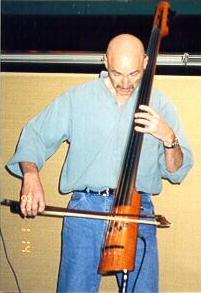
followed. First was Tony Levin, playing upright bowed bass. His solo
impromptu piece was very Crimsonesque, complete with octave bends and
jolting riffs. Then came a cut from the Gorn-Levin-Marotta CD, "From the
Caves of the Iron Mountain" -- unique not only for its venue (recorded in an
underground cave) but also for the combining of audio and text on the same CD.
The
September 13th playback in London was billed by DGM as a "listening of our
new releases, not a live King Crimson concert". Perhaps so, however as far
as I could tell, nearly all the 1000-plus folks who attended the playback
were there for the Crimson experience, to pay tribute to one of the most
potent four-man rock lineups ever. Tony Geballe, the only non-Crimsoner
featured at the playback, kicked things off with a 12-string acoustical
soundscape. Tony belongs to Fripp's inner circle of Crafty Guitarists and,
as I learned from a later conversation with him, he roomed with Trey Gunn in
West Virginia. After a few live pieces and a playback from Gabelle's new CD,
Robert Fripp took the reign as MC, asking the crowd, "are you ready to
rock?" Over the next hour, a succession of Crimsoners, past and present,
followed. First was Tony Levin, playing upright bowed bass. His solo
impromptu piece was very Crimsonesque, complete with octave bends and
jolting riffs. Then came a cut from the Gorn-Levin-Marotta CD, "From the
Caves of the Iron Mountain" -- unique not only for its venue (recorded in an
underground cave) but also for the combining of audio and text on the same CD.
Next on stage was Bill Bruford, who was hilarious. Bill broke the place up
when he mentioned how much he tires of constantly being approached and asked
"hey dude, when ya gonna get together again with Jon Andersen?" 
 He then
related his passion for jazz, noting "that's where I began and that's where
I'll probably end". Several cuts from his new release, "If Summer Had Its
Ghosts", were played, with two jazz icons -- Ralph Towner (founding member of
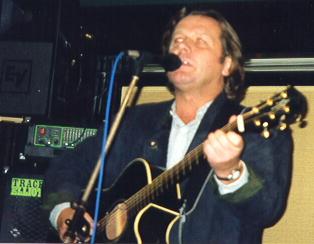
Oregon) and Eddie Gomez -- joining in. Next up was the bassist/vocalist of
the 72-74 Crimson line-up, John Wetton. John, who just performed the
previous night in Rome, treated the crowd to one of Crimson's loveliest,
most stirring ballads, Book of Saturday. This was the fourth time I heard
him perform BoS this year, and once again, John rose to the occasion. His
phrasings and acoustical guitar work were superb, made all the more
impressive by the fact he was performing solo while his former bandmates
were looking on. While no Robert Fripp, John's an accomplished guitarist
just the same, and his voice remains as powerful and regal as ever. Kudos
to David Singleton for blasting right into "Easy Money" from the
Concertgebouw show a few notes after Book of Saturday ended. It was a
powerful transition that pumped up the crowd, prompting heads across the
ballroom to start bobbing and minds to start spinning. Wetton's fuzz-box
bass and soulful vocals are riveting on this song.
He then
related his passion for jazz, noting "that's where I began and that's where
I'll probably end". Several cuts from his new release, "If Summer Had Its
Ghosts", were played, with two jazz icons -- Ralph Towner (founding member of
Oregon) and Eddie Gomez -- joining in. Next up was the bassist/vocalist of
the 72-74 Crimson line-up, John Wetton. John, who just performed the
previous night in Rome, treated the crowd to one of Crimson's loveliest,
most stirring ballads, Book of Saturday. This was the fourth time I heard
him perform BoS this year, and once again, John rose to the occasion. His
phrasings and acoustical guitar work were superb, made all the more
impressive by the fact he was performing solo while his former bandmates
were looking on. While no Robert Fripp, John's an accomplished guitarist
just the same, and his voice remains as powerful and regal as ever. Kudos
to David Singleton for blasting right into "Easy Money" from the
Concertgebouw show a few notes after Book of Saturday ended. It was a
powerful transition that pumped up the crowd, prompting heads across the
ballroom to start bobbing and minds to start spinning. Wetton's fuzz-box
bass and soulful vocals are riveting on this song.
Once EZ$ ended, Robert Fripp invited onto stage the other two members
from 73-74, David Cross and Richard Palmer-James, to a most appreciative
audience. 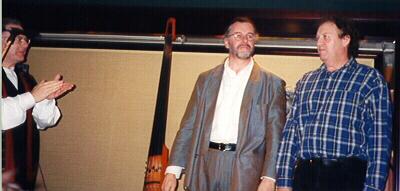 As with the Playback six months earlier, I suddenly felt a rush
of emotion, realizing these five sensationally talented musicians who broke
entirely new ground in the music world were all under the same roof for the
first time in over 20 years. The second piece played from Concertgebouw was
the all-strings version of Schizoid Man, the show's encore. Overall,
there's really no comparison between The Night Watch CD and the earlier
bootlegs. The Night Watch CD is masterfully engineered and true to the
original concert, with few overdubs. It also benefits from the absence of
the chatty announcer whose banter mars the BBC recordings of the show found
on bootlegs. After Schizoid Man ended, Robert invited the audience to form
a queue to meet and get autographs from the ‘73-74 band members. The line
snaked along the corridors of the Grand Ballroom, with folks holding on
dearly to old Crimson vinyls, drumskins, tee-shirts, and other odds and ends
to be signed.
As with the Playback six months earlier, I suddenly felt a rush
of emotion, realizing these five sensationally talented musicians who broke
entirely new ground in the music world were all under the same roof for the
first time in over 20 years. The second piece played from Concertgebouw was
the all-strings version of Schizoid Man, the show's encore. Overall,
there's really no comparison between The Night Watch CD and the earlier
bootlegs. The Night Watch CD is masterfully engineered and true to the
original concert, with few overdubs. It also benefits from the absence of
the chatty announcer whose banter mars the BBC recordings of the show found
on bootlegs. After Schizoid Man ended, Robert invited the audience to form
a queue to meet and get autographs from the ‘73-74 band members. The line
snaked along the corridors of the Grand Ballroom, with folks holding on
dearly to old Crimson vinyls, drumskins, tee-shirts, and other odds and ends
to be signed.
It was at this point that one of the afternoon's special moments occurred.
Robert asked Dave Singleton to play a 4-minute clip of the Double Trio's
recent sessions in Nashville. 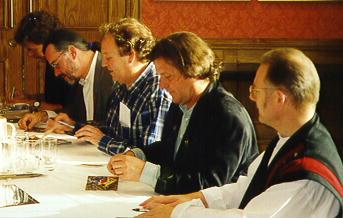 I continued to sit in the audience while
others queued so I could concentrate on what was being played. And I
couldn't believe what I was hearing. This was improvisational, jamming
Crimson at its best.
The first tune is lead by what I swear is an organ, played Chick Corea
style, backed by Levin's bass bottom. What really stands out, however, is
Trey Gunn, who layers in a four-chord Warr guitar backdrop. Then there's a
section with what sounds like a flute. If the organ and flute sounds were
from the six-string guitars of Adrian or Robert, or both, then they've
mastered new digital sounds that I've yet to hear. This first cut really
enters unchartered waters. The second cut features Adrian on his trusted
Fender Strat, laying down long guitar strokes, and Fripp following with
funky keyboard sounds. The four minutes of new stuff left me awestruck. I
just hope that Fripp and company put out a "taster" as soon as possible,
prior to releasing the full CD, following the pattern set by Vroom/Thrak.
This stuff really whetted my appetite, and I want more!
I continued to sit in the audience while
others queued so I could concentrate on what was being played. And I
couldn't believe what I was hearing. This was improvisational, jamming
Crimson at its best.
The first tune is lead by what I swear is an organ, played Chick Corea
style, backed by Levin's bass bottom. What really stands out, however, is
Trey Gunn, who layers in a four-chord Warr guitar backdrop. Then there's a
section with what sounds like a flute. If the organ and flute sounds were
from the six-string guitars of Adrian or Robert, or both, then they've
mastered new digital sounds that I've yet to hear. This first cut really
enters unchartered waters. The second cut features Adrian on his trusted
Fender Strat, laying down long guitar strokes, and Fripp following with
funky keyboard sounds. The four minutes of new stuff left me awestruck. I
just hope that Fripp and company put out a "taster" as soon as possible,
prior to releasing the full CD, following the pattern set by Vroom/Thrak.
This stuff really whetted my appetite, and I want more!
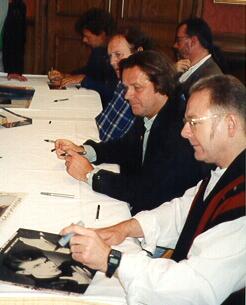
For nearly two hours after the playback, Messrs.
Fripp/Cross/Wetton/Bruford/Palmer-James patiently sat 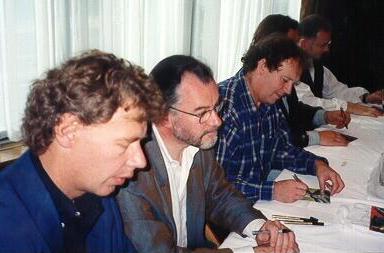
 and with good humor
autographed CD and LP covers, tee-shirts, drumskins, etc. for the droves.
Unlike at the Epitaph playback in London, fans were allowed to snap photos.
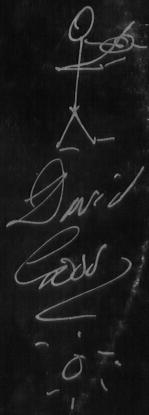
I was one of the last to get my LPs autographed -- I hauled LTIA, SABB, Red,
and USA all the way from San Francisco! My own prize: David Cross drew a
caricature of himself playing violin on the back of my Red album. After
asking Bill, tongue-in-cheek, "when ya going to get together again with Jon
Andersen", I related our conversation some 16 years previously between shows
at the Old Wardof in San Francisco, discussing his new bright yellow Simmons
kit. Richard Palmer-James was surprised I knew he used to play guitar for
the group Supertramp, who would be regrouping for the first time in some 15
years at the Royal Albert a week after the playback, a show Richard
indicated to me he'd be hanging around for. In the hallway, I chatted with
Richard at length. He's lives in Germany, working full time as a lyricist.
He mentioned he met Pete Sinfield briefly in 1973 for five minutes, and has
never communicated with him since. And he somewhat embarrassingly confided
to me that Doctor D is about a drug pusher, which perhaps has something to
do with why this tune (one of my own favorites from this era) never made it
onto SaBB.
and with good humor
autographed CD and LP covers, tee-shirts, drumskins, etc. for the droves.
Unlike at the Epitaph playback in London, fans were allowed to snap photos.
I was one of the last to get my LPs autographed -- I hauled LTIA, SABB, Red,
and USA all the way from San Francisco! My own prize: David Cross drew a
caricature of himself playing violin on the back of my Red album. After
asking Bill, tongue-in-cheek, "when ya going to get together again with Jon
Andersen", I related our conversation some 16 years previously between shows
at the Old Wardof in San Francisco, discussing his new bright yellow Simmons
kit. Richard Palmer-James was surprised I knew he used to play guitar for
the group Supertramp, who would be regrouping for the first time in some 15
years at the Royal Albert a week after the playback, a show Richard
indicated to me he'd be hanging around for. In the hallway, I chatted with
Richard at length. He's lives in Germany, working full time as a lyricist.
He mentioned he met Pete Sinfield briefly in 1973 for five minutes, and has
never communicated with him since. And he somewhat embarrassingly confided
to me that Doctor D is about a drug pusher, which perhaps has something to
do with why this tune (one of my own favorites from this era) never made it
onto SaBB.
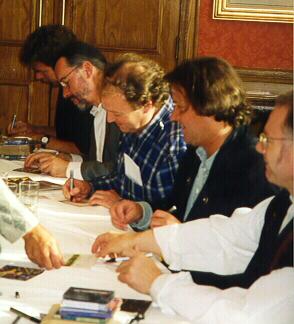 Perhaps more than anyone, I wanted to thank and shake the hand of David
Cross. Almost in the same vein as Ian McDonald from the ‘69 band, I always
thought David was an underappreciated part of this ensemble. He wrote the
book on how strings could be intelligently used in prog-rock, from the
solemn intimacy of Trio to the piercing, hard-edge riffs in Great Deceiver.
After several backstage conversations already this year, John Wetton seems
to know me pretty well by now, and he thanked me for supporting his web page
with photos. Last, I chatted with Robert at the end of the table. Despite
knowing that I collect audience recordings and videos of Crimson, he seems
to harbor no ill will. I kneeled besides him and chatted for a while,
mainly about his Salisbury soundscapes performance, as folks passed by for
autographs. Robert also shared some Crimson folklore with me. His parting
advice was to get to his G3 performance in Concord before 5 o'clock, which
I'll certainly do.
Perhaps more than anyone, I wanted to thank and shake the hand of David
Cross. Almost in the same vein as Ian McDonald from the ‘69 band, I always
thought David was an underappreciated part of this ensemble. He wrote the
book on how strings could be intelligently used in prog-rock, from the
solemn intimacy of Trio to the piercing, hard-edge riffs in Great Deceiver.
After several backstage conversations already this year, John Wetton seems
to know me pretty well by now, and he thanked me for supporting his web page
with photos. Last, I chatted with Robert at the end of the table. Despite
knowing that I collect audience recordings and videos of Crimson, he seems
to harbor no ill will. I kneeled besides him and chatted for a while,
mainly about his Salisbury soundscapes performance, as folks passed by for
autographs. Robert also shared some Crimson folklore with me. His parting
advice was to get to his G3 performance in Concord before 5 o'clock, which
I'll certainly do.
 Another highpoint of the afternoon was getting to play the two fully
restored mellotrons that were on the premises. I couldn't resist tapping
out the melody to ItCotCK on this vintage music machine, equipped with the
same type of MKII violin tapes used by McDonald on the first album. The
tron's sound is so much fuller and symphonic than that of modern-day digital
keyboards. I decided to order one of these analog behemoths from the vendor,
the same guy who supplies Fripp and friends: hell, there's only 2,200 on the
entire planet, and their value will only rise with time -- it's money in the
bank. David Singleton and others at DGM indicated the next live release
will be called Deja Vroom, perhaps coming out early next year. And since 4
of the 6 current Crimson members live in the states, they're thinking about
holding a playback there, perhaps in L.A. For once, one in virtually my
back yard! Another tidbit to pass on was a brochure at the playback
announcing that there is a soon-to-be-released tribute album, called
Schizoid Dimensions, with covers from the 1969-74 period, including a
Cross/Wetton collaboration on Exiles.
Another highpoint of the afternoon was getting to play the two fully
restored mellotrons that were on the premises. I couldn't resist tapping
out the melody to ItCotCK on this vintage music machine, equipped with the
same type of MKII violin tapes used by McDonald on the first album. The
tron's sound is so much fuller and symphonic than that of modern-day digital
keyboards. I decided to order one of these analog behemoths from the vendor,
the same guy who supplies Fripp and friends: hell, there's only 2,200 on the
entire planet, and their value will only rise with time -- it's money in the
bank. David Singleton and others at DGM indicated the next live release
will be called Deja Vroom, perhaps coming out early next year. And since 4
of the 6 current Crimson members live in the states, they're thinking about
holding a playback there, perhaps in L.A. For once, one in virtually my
back yard! Another tidbit to pass on was a brochure at the playback
announcing that there is a soon-to-be-released tribute album, called
Schizoid Dimensions, with covers from the 1969-74 period, including a
Cross/Wetton collaboration on Exiles.
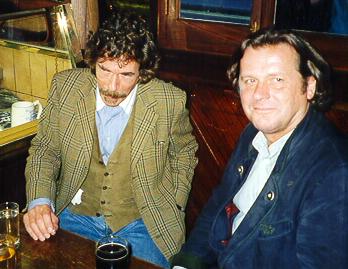 As with the March playback, the evening ended with a bunch of us more rowdy
Crimson devotees drowning down beer at the Rose and Crown pub several blocks
away, with myself again being the only American in the bunch. And as
before, Michael Giles joined afterwards, though this time John Wetton tagged
along as well. I had talked with Mike at length earlier in the afternoon.
He mentioned Ian McDonald is coming to London in a few weeks and they're
getting together to try out some new material Ian's written for a
forthcoming CD. Mike mentioned he also has 5-CDs worth of his own music
that he's hoping to put out soon.
As with the March playback, the evening ended with a bunch of us more rowdy
Crimson devotees drowning down beer at the Rose and Crown pub several blocks
away, with myself again being the only American in the bunch. And as
before, Michael Giles joined afterwards, though this time John Wetton tagged
along as well. I had talked with Mike at length earlier in the afternoon.
He mentioned Ian McDonald is coming to London in a few weeks and they're
getting together to try out some new material Ian's written for a
forthcoming CD. Mike mentioned he also has 5-CDs worth of his own music
that he's hoping to put out soon.
Suffering from jet lag, I stumbled back to my hotel by darkfall. While resting back in my room, I reflected on the day's events, realizing how blessed I and others have been to have experienced the year's two playback tributes to the ‘69-74 Crimson legacy. In a Crimsonesque sort of way, for me, there was an ironic connection between these two playbacks. After the Epitaph playback in March, I returned home via Amsterdam (the only way I could arrange a connecting flight back). While overnighting in Amsterdam, I headed straight to the Concertgebouw. I lucked out by walking up to the second level right when a concert was ending and well-heeled folks were piling out. I slipped in the door, and for some 15 minutes I sat in a nearly empty concert hall, awed by its magnificence, beauty, and near perfect acoustics. My thoughts turned to how it must have felt some 24 years earlier to have witnessed and heard Fripp, Cross, and Wetton mystically perform Trio on the very stage before me, with Mr. Bruford patiently sitting on the side with his drumsticks crossed over his chest. And how poignant and befitting it must have been to hear The Night Watch performed in Rembrandt's home town. And how power tunes like Easy Money, Larks' Tongues, and Schizoid Man must have rattled the very foundations of this ornate opera house. After attending last week's Night Watch playback, my sense of connection with this celebrated show of 24 years ago somehow seems all the more complete. Thanks Robert, David, John, Bill, Richard, and DGM.

[Bill Bruford with Robert Cervero]

All photographs and memorabilia courtesy of Robert Cervero
Back to Elephant Talk -- Reviews page